Case study
Sherry.
Tool sharing that turns neighbours into a small, working circular economy.
- Year
- 2024
- Type
- Mobile app
- Role
- Solo design
- Timeline
- 8 weeks
- Tools
- Figma · FigJam · Framer
The problem
Tools sit unused in most homes; sharing fails on trust, not technology.
The outcome
Selected by faculty as one of two pieces demoed to the cohort.
Highlights
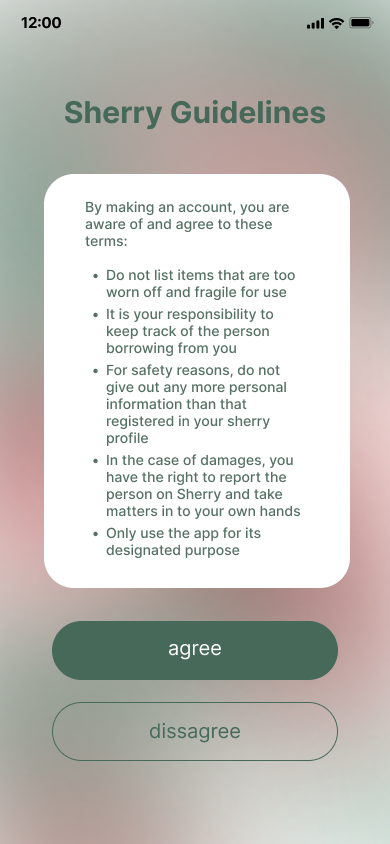
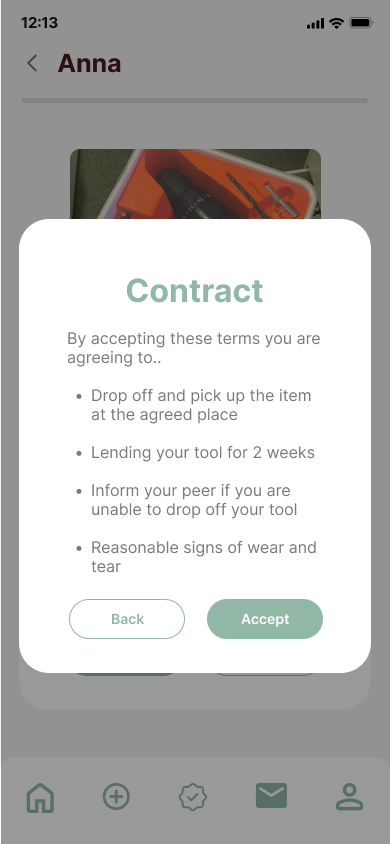
Onboarding — agreeing to the social contract upfront
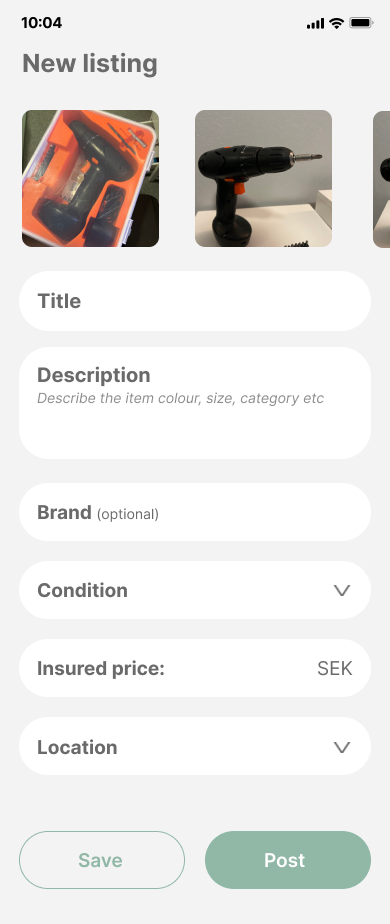
Listing a tool — title, condition, insured price, location
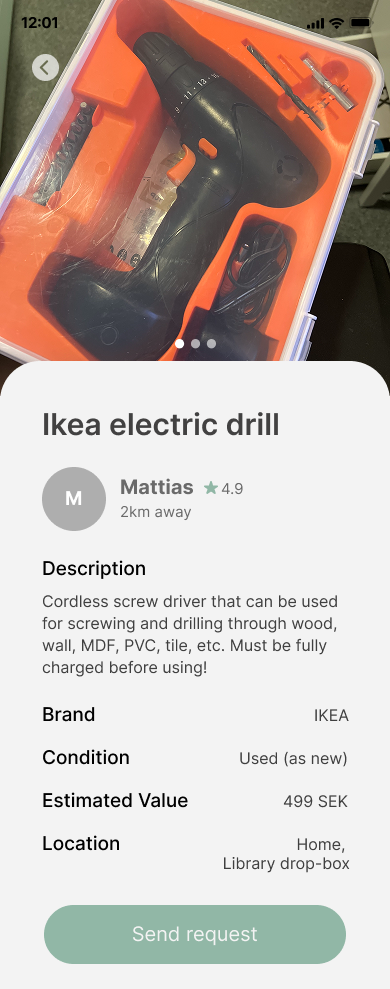
Borrow request — the lender, the item, the trust signals
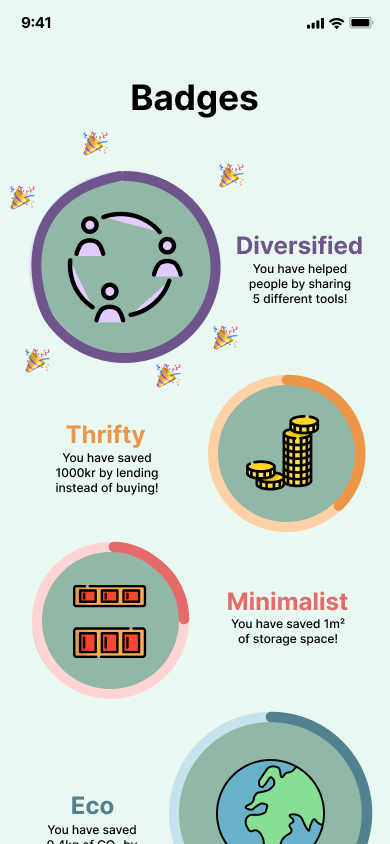
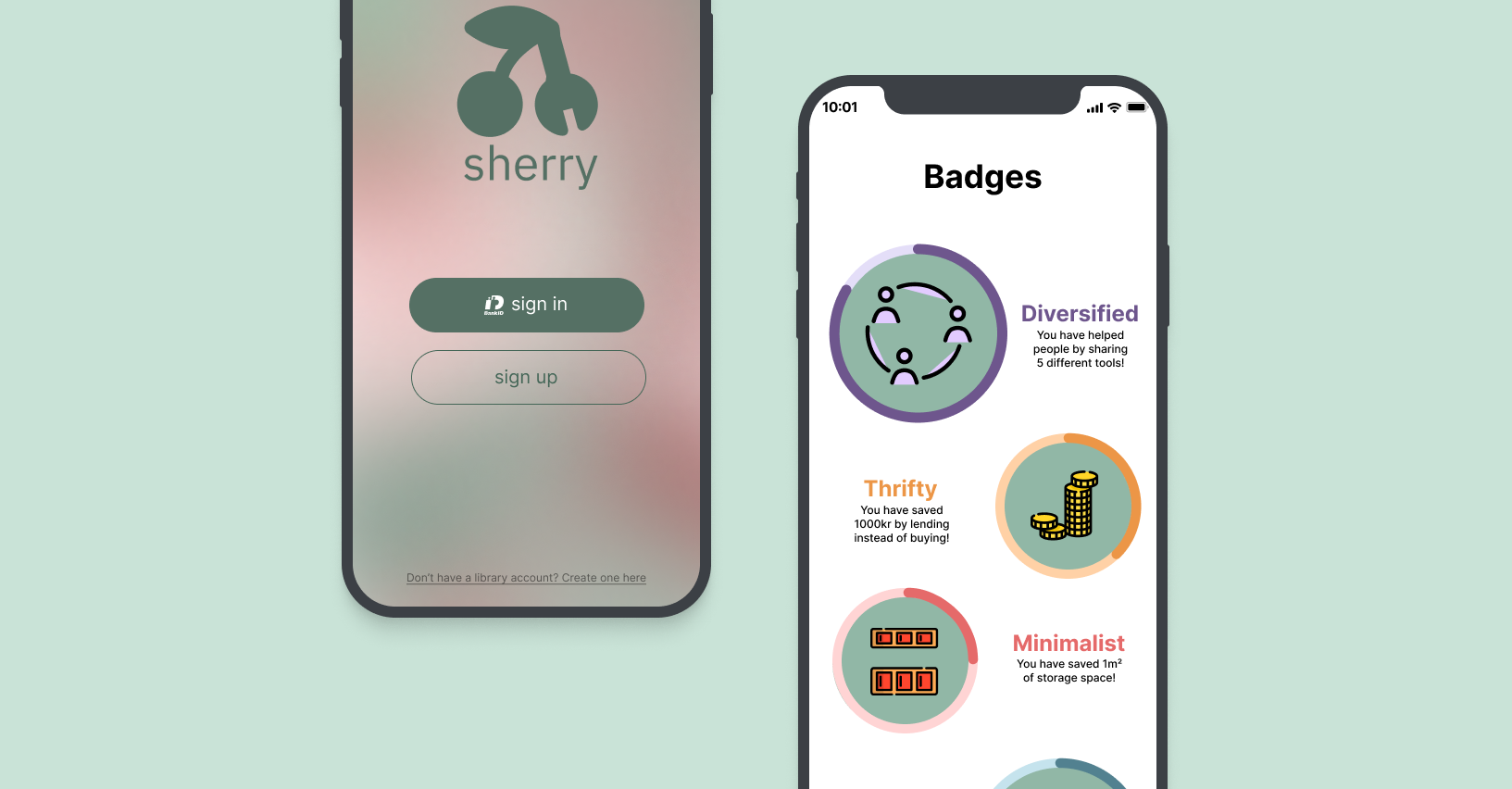
Badges — visible reward for circular behaviour
The problem.
Most households own tools they use a few times a year. The opportunity to share is obvious — but the trust layer isn't. Accountability, returning items, what to do when something breaks. I designed for those first.
The approach.
Step 01
Picking the model.
Where could circular live in Malmö?
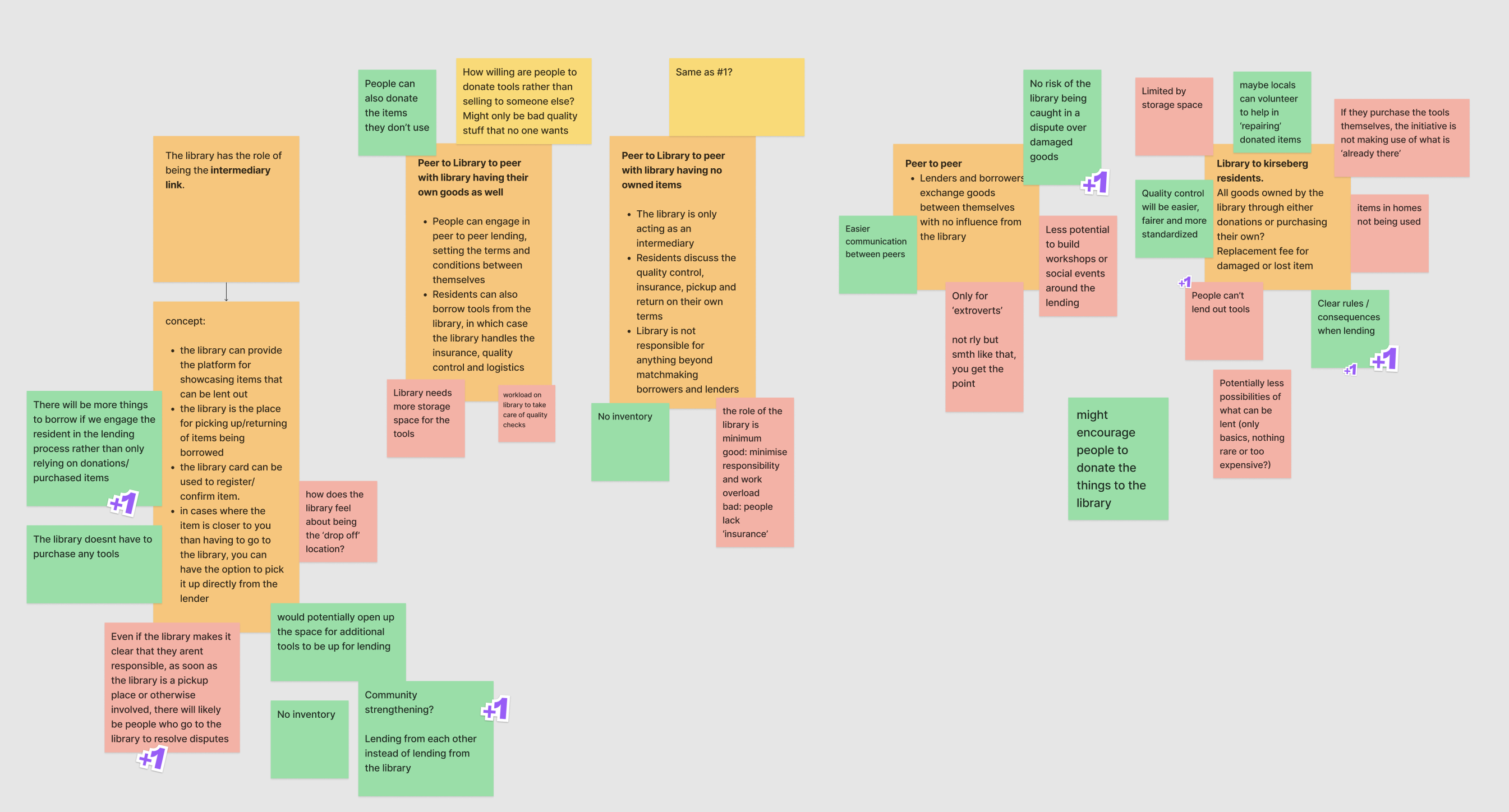
Mapped different shapes a circular economy could take here — peer-to-peer between neighbours, library-as-intermediary, library-to-library lending. Each had a different trust profile. I committed to the intermediary library model: legible accountability, fewer awkward stranger interactions.
Step 02
Contributor's journey.
Drop-off sets every expectation that follows.
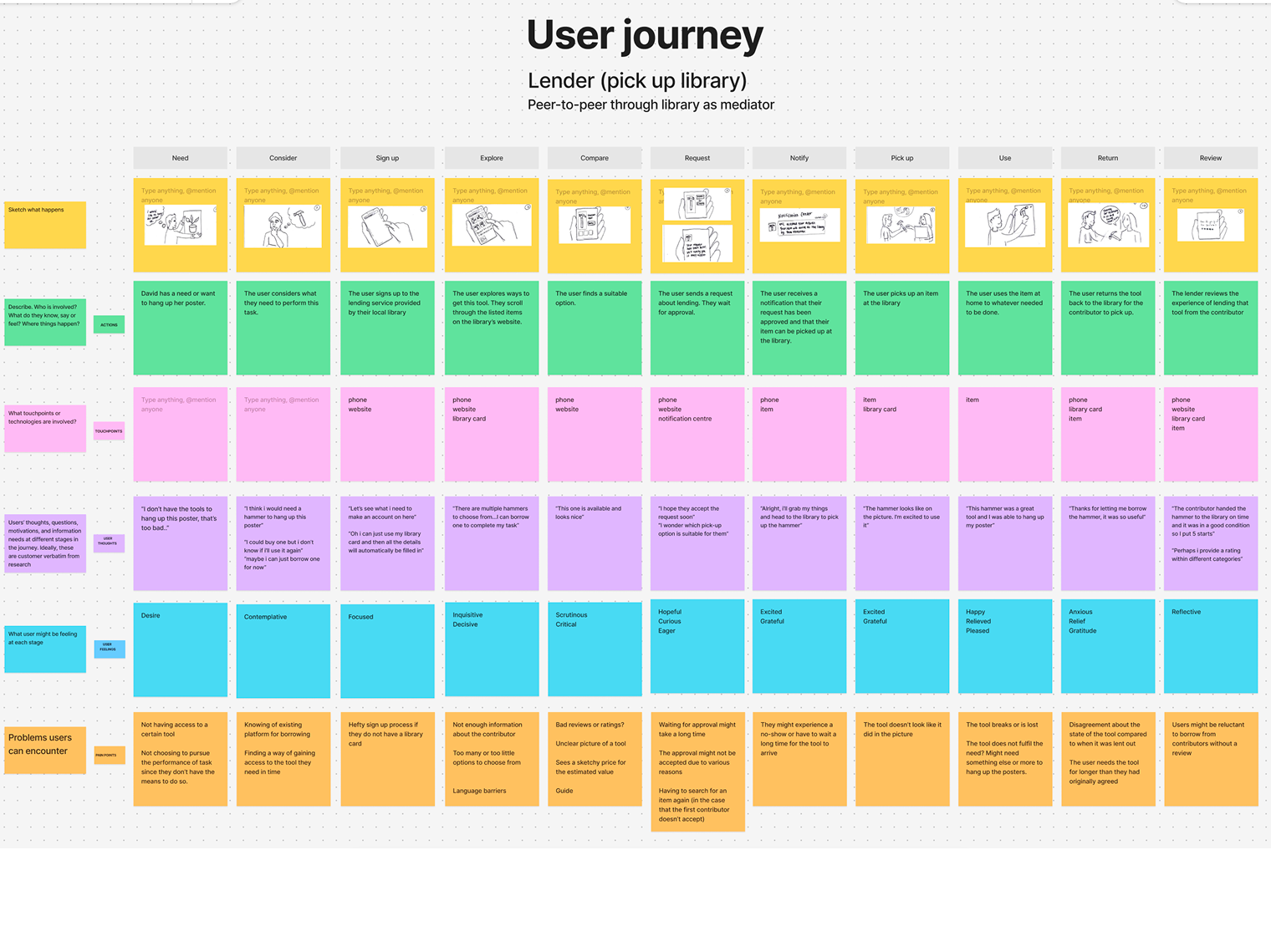
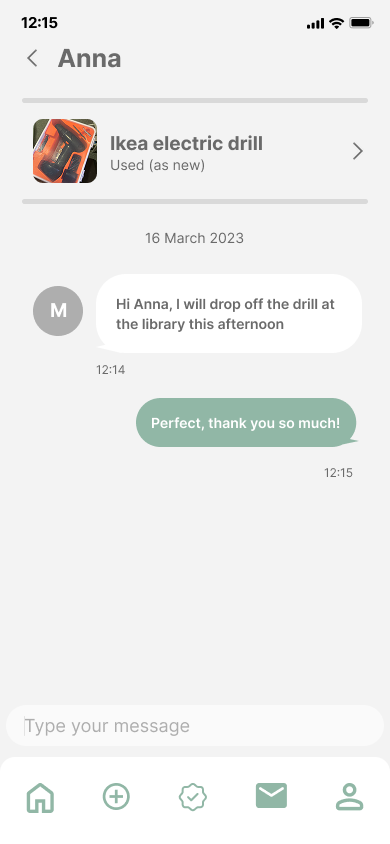
Walked the contributor's arc — sign-up, listing, the trip to the library, the hand-off. The drop-off moment turned out to carry the whole emotional weight: this is when someone decides whether their thing is in safe hands.
Step 03
Lender's journey.
The library mediates, so strangers don't have to.
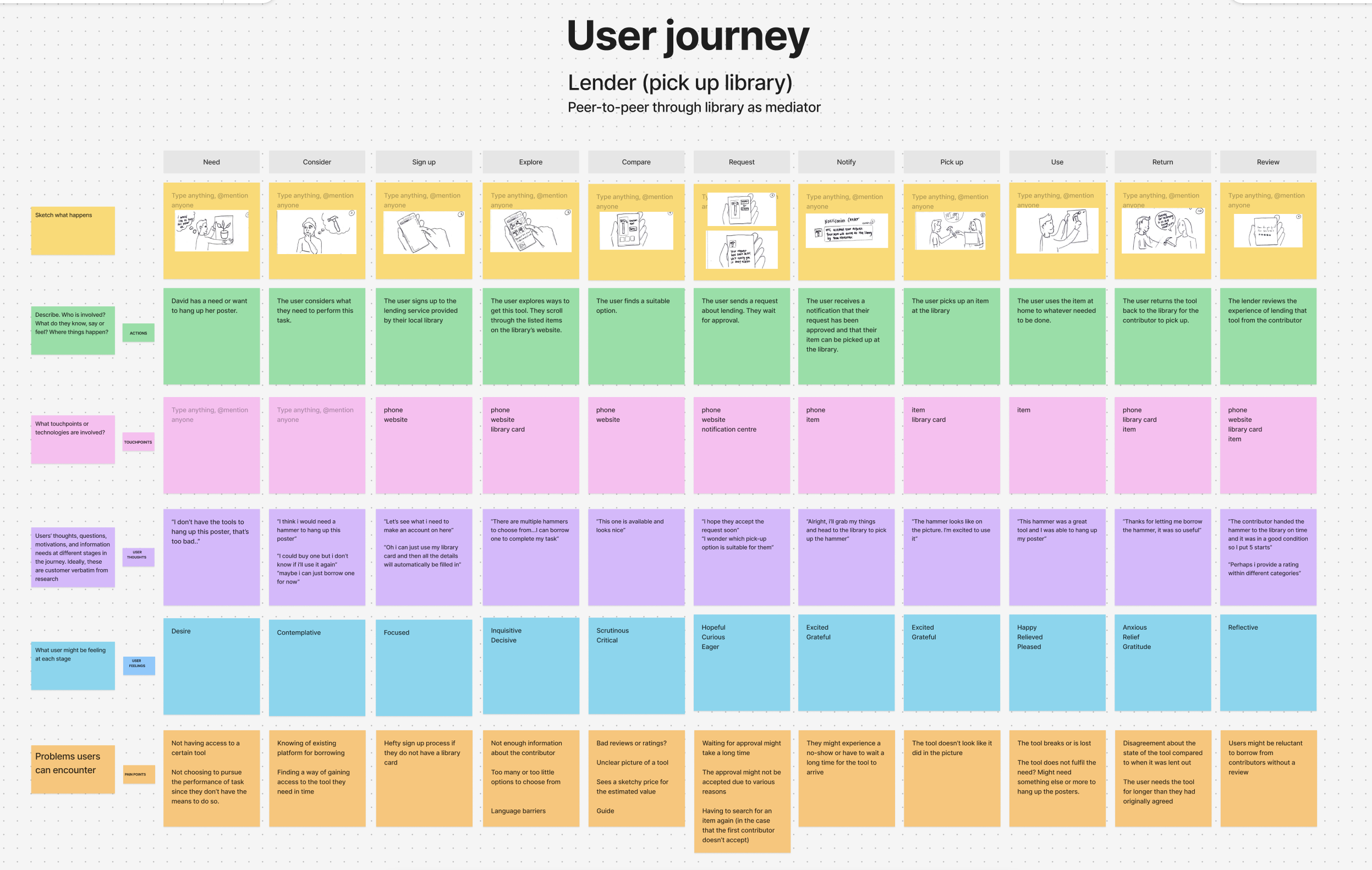
Mirrored the path from the lender's side — need, browse, request, pick-up, return, renew. The library sits in the middle: it absorbs the awkward bits of peer-to-peer (vetting, accountability, the handover) so neither side has to perform trust at a stranger.
“I optimised for trust before speed.”
The solution.
The outcome.
8 weeks
Concept to high-fi
The flows were selected by faculty as one of two presented to the cohort. Peer feedback specifically called out the trust-first onboarding as feeling 'inviting rather than annoying' — the deliberate friction worked.
6
User interviews
1 of 2
Selected for demo
What I’d do differently
Most testing focused on borrowers — I'd run more tests on the lending side. The first listing experience deserves the same care as the first borrow.
Next case study